

It’s been some time, but I’ve returned! This time we got a pretty unique blend of genres: Tower defense and visual novel. And to spice up the tower defense portion even further, the devs classify it as a “reverse” tower defense, where you manage a party of units to send out to take out the enemy towers. There are clear inspirations from the Persona series in terms of time management, managing friendships, and a switch between modern day reality and a supernatural demonic one. Incidentally, this game also involves your main character, named Affogato, hosting a coffee shop including a coffee management mini-game, as you serve various characters their drink of choice and talk through their problems. There are some heavier themes regarding depression, abuse, addiction, sexism and more, and the writing is generally good enough to cover these with care. The worst you could say is that it can be on the nose or simplify topics, but we are talking an anime life sim game so I’d say it’s mostly par for the course. Coupled with a really vibrant, jazzy, fun soundtrack and solid voice acting (japanese or chinese only), it allowed me to mostly overlook some grievances that we’ll touch on later in this review.
Affogato takes very little time to get into its core gameplay loop, as it thrusts you into the tower defense portion, and chases it with its first signs of visual novel-esque dialogue and light coffee maker simulation. I think for folks who may dread the incredibly slow pacing of the first hours of a modern Persona game, may relish in the fact that this game is as streamlined as can be. That being said, I think for someone who is really into the roleplaying aspect of those game, the life simulation mechanics are pretty light, as well as the time management. I was actually surprised how despite the fact that the game introduces you as the owner of a coffee shop, you really aren’t required to open up shop during the day, nor does the game revolve around coffee shop management whatsoever. I may have been drawing comparisons to my experience with the game Potionomics, which touts a similar premise to this one, but I would say that the games are night and day different despite being within similar genres. Early on, the game teaches you that every month, you have rent to pay and that’s about it when it comes to the “stress” of your time management. I would say, at least on the normal difficulty, outside of just getting stuck on a tower defense level, the debt felt like it paid itself as story relevant info was automatically trickled from day to day. I don’t think there’s a way you can screw up your economy and miss out, which for some people may help play into the more chill vibes presented. But if someone was looking to be challenged in terms of their resource management and time management savviness, I think most of the day cycle system is designed primarily to provide replay value, as I don’t believe you can achieve everything in a single playthrough. Every day, you have room to take two city actions. Usually this will involve either visiting a shop/business in town, talking to your companions, or performing an optional battle. The shops/businesses can provide a permanent stat for your character among Beauty, Intelligence, and Courage. Honestly, the game doesn’t do a great job early on of breaking down what collecting these stats does, and as far as I can tell, it has no effect on the tower defense portion of the game. Nonetheless, as I played, I realized that companion story progression eventually demanded a certain level of stat, but it’s never clear exactly how much is needed outside of telling you which stat may or may not be lacking. What I did like is I would find items for taking riskier routes during the tower defense levels that could be used as gifts to raise your bond with companions. I was immediately reminded of Fire Emblem: Three Houses where both this game and the aforementioned don’t outright tell you which items correspond with which companion. HOWEVER, I was extremely grateful to find out that I did not need to navigate a menu to click on the exact item, as the game would just automatically prompt me to present the appropriate item if I had it in my inventory. No more spending minutes just clicking every single item in my bag until I got the response I wanted. HUZZAH!
After a while, I started to realize that the game just sort of takes you for a ride: you never know when a new story beat will just suddenly begin – granted I’m certain that every day corresponds to the same story beats each playthrough. But my point is that there’s not like a prompt you answer which makes you progress the story, I would say the story just moves at its own pace day by day. It is clear that there are story bosses and clear delineations between each “mystery” you solve. There’s a broad formula of pretty grounded character drama involving dark topics including depression, suicide, abuse, sexism, etc all being caused by demons only you can sense and take out. When it comes to societal commentary and the more serious moments in the game, most of it can be taken seriously, even if some stories can end up very over the top. But hey: it is anime we’re talking about here, things are bound to be exaggerated.
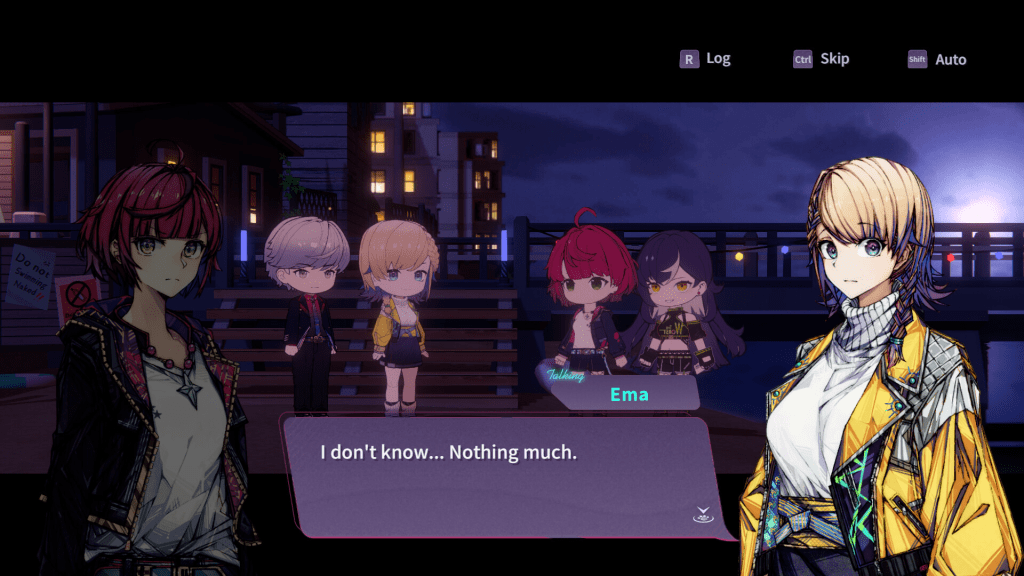
I think the star of the show is the tower defense gameplay, because it does feel very different as a greater sum of its parts, despite Frankensteining a lot of mechanics from other games. There’s a little bit of gacha game team building and the energy systems of games like Clash Royale. Fortunately, there are zero micro-transactions or lootboxes or anything that can’t be earned through normal play, so no worries on that front. You start every level picking from a roster of characters that each sport their own health, attack, resource cost (called Penta), and ability. Characters have a meter that fills up as they engage in combat, and once full, will automatically trigger a special ability. Some add special cards to your hand, while others provide high support or offensive capabilities. Once you pick your team, you are thrust into a map of conveyor belts and enemy “tower” monsters that will serve as obstacles as you head to the end of the level. As I mentioned earlier, the game calls itself a “reverse” tower defense, as you are on the offense wrecking havoc on the level’s preset defenses. Honestly, a huge grievance that I have is that there is zero way to preview a level prior to just starting it, making any sense of preparation feel moot, as you have no clue which units may be more effective when you’re going completely blind. A lot of times I’d find myself just haphazardly entering a level, only to study the level design and quit out to strategize for real. Fortunately, the developers have done a great job receiving feedback, and I was alerted that they saw my request for this feature and it is being looked into. They have done a good job with patches and adding QoL changes that help clean up the UI elements and make more of the life simulation aspects engaging. Back to the gameplay explanation, a lot of the game boils down to a puzzle to figure out how to afford enough Penta to summon your army of characters. This can lead to a common play pattern of summoning the same few setup units for every level. The Hermit was one of my most used units, as it generates Penta whenever it attacks. Sadly, Penta is only generated via card effects, or as a bounty marked on certain enemies. As a result, despite sporting a sizeable roster as you progress through the game, the reality is that you often will need to play the same few units in an exact order to even supplement the rest of your army. That being said, once you do get the money rolling and your team is fully deployed, you feel like a badass. I can’t tell if this is entirely a bad thing, but I couldn’t help but feel restricted in a lot of ways when I was learning the ropes.
But honestly, I was so impressed by the way the level design and objectives evolve throughout the campaign, that even if it might feel like the limited number of approaches to a level is a bit stifling, I was very engaged throughout. The game adds a lot of things to juggle between various enemy types, new environmental hazards, and alternative win conditions/objectives that really keep you on your toes. Maps do start to open up a lot more as the game goes on, to the point that you can start to flex your game plan and divide and conquer at your own pace. I enjoyed taking everything in and mapping out where I might go, pausing the game every few sections I cleared to re-evaluate. It really gives that tactical feel to it all, finding the optimal route to generate enough penta to play things out, snag a collectible in the level, or ensure that your units don’t die en route to the end of the level. One of the more fiddly aspects of the game is that your characters will automatically form what I can only describe as a conga line, which can become pretty unwieldy as you summon more characters. There were times when it would be difficult to see who was in the front of the line, or it would feel like it’s impossible to reorganize who is in front, as the only way to redirect your troops, is to use the arrows on the map to guide your units accordingly. You feel like you’re managing a locomotive system, as your train of units follow the tracks according to the signals you set. But sometimes you miss a signal and you are left helpless, unable to undo your mistake as you watch your units march to an untimely demise. Fortunately, the game does spout checkpoints scattered throughout most levels, but the sluggishness of managing your train of dudes can be infuriating at times. Especially when the game bugs out and your units get stuck moving back and forth only to be pelted incessantly by homing attacks. But when the game works, man does it sing. The highs are very high.

That’s another big aspect of the game: as your units die, they can be re-deployed, but their penta cost is inflated as a punishment. And to reiterate, you don’t just automatically generate money in this game. This means that the vast majority of the time, losing too many units is just death, as it can become nigh- impossible to build back your economy to replay your troops. One thing the game doesn’t do a great job teaching is the fact that a big part of the game is knowing when to purposely retreat your units so that you can get a rebate on their penta costs and loop through your few economic units to restart the chain. Now granted, your econ generating units don’t do a great job at soaking hits, so sometimes you just have to quit and try again and hope you don’t kill your units too quickly to recoup your losses. I think for new players, this can feel like the game is incredibly punishing, but I think most levels felt doable and not cheap. I would feel like I could learn from my mistakes and take another approach as I played. That being said, some levels that focus a bit more on the real time aspects of the game or quick reaction times can be incredibly stressful, as the game does not feel like it accommodates fast paced maneuvers with how cumbersome managing your train of units can be. There are moments where I felt l needed to press the same signal like 3-4 times within a second, and mistiming it even a little just meant instant death. It takes a little bit of patience and liberal use of the pause button to get things right, but yeah… I think some players may be turned off by needing to make several inputs in rapid succession. Phew! Okay I think that just about wraps up both gameplay sections.
Alright so conclusion: I really like the ideas that the game presents, as I find them very ambitious. I think there’s a few rough edges in terms of providing new players the information they need to make informed decisions, but the developers have been adding more and more Quality of Life changes to help ease folks in. The life sim aspect may be a tad lacking for some players, but it may also be refreshing due to how quickly you can fly through the game. There’s an addictive just one more day aspect to it that I think gamers who want a game to respect their time can appreciate. For me, the most compelling part of the game has to be the tower defense sections – it’s pretty darn novel. I think there’s a bit of clean-up that can be done in terms of making the screen readable for the player, as well as tightening up the responsiveness of the GUI. But it is very rewarding for folks who are a fan of puzzles, while also squeezing some of that JRPG goodness in a brand new form. I enjoyed my time with Affogato, I hope things keep getting patched up at the rate they are currently, so people can really come to appreciate what it has to offer. Major props go out to the soundtrack again by the way, because it’s so damn catchy and stylish and really draws you in.
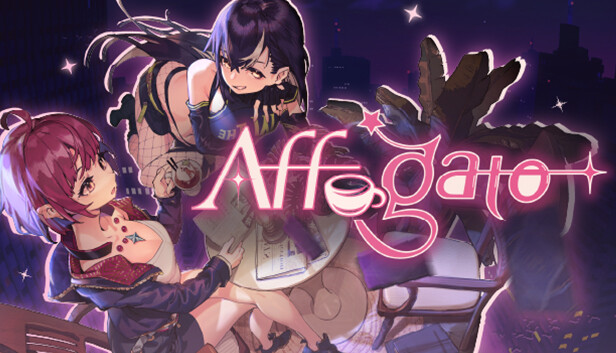
Affogato was developed by Befun Studio
Available on Steam for $16.99

Provided free reviewer copy via developer.
Hellfirebam has awarded Affogato the Indie gamer Seal of Approval. It isn’t perfect, but I appreciate a game for taking a chance on a new mashup of ideas and running with it to create something truly special.
 Indie Gamer Team